It doesn’t have to be interesting by anyone else’s measure
In Conversation with Melissa Febos
Billy Lezra

photo by Laura Bianchi
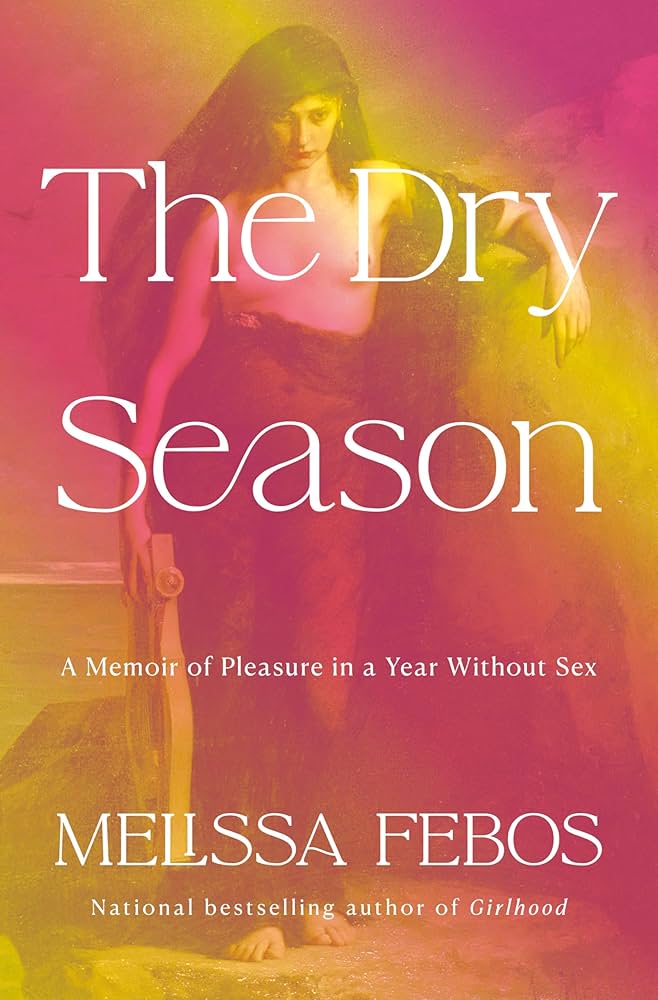
Melissa Febos is the author of five books, including the national bestselling essay collection, GIRLHOOD, which has been translated into ten languages and won the National Book Critics Circle Award in Criticism. Her craft book, BODY WORK (2022), was also a national bestseller and an LA Times Bestseller. A new memoir, The Dry Season, was published by Alfred. A. Knopf in June 2025.
The recipient of fellowships and awards from the Guggenheim Foundation Fellowship, the National Endowment for the Arts, the British Library, MacDowell, the Bogliasco Foundation, the Black Mountain Institute, LAMBDA Literary, the American Library in Paris, and others, Melissa’s work has appeared in publications including The Paris Review, The New Yorker, The Best American Essays, The Best American Food and Travel Writing, Granta, The Believer, The New York Times Magazine, The Guardian, Elle, and Vogue.
She holds an MFA from Sarah Lawrence College and is the Roy J. Carver Professor at the University of Iowa, where she teaches in the Nonfiction Writing Program. She lives in Iowa City with her wife, the poet Donika Kelly.
This interview has been edited for clarity and length.
As I was reading The Dry Season I was struck by the interplay between spiritual hunger and spiritual satiety; relational hunger and relational satiety. I noticed particular images and objects that underlined this tension: the keyhole, the bread and butter, the coyote, the cigarette, the spinach that turns the smoothie green. How did you land on these images/objects?
It’s interesting because that list includes both figurative and metaphorical images, and also actual objects that occur in the concrete world of the story. It’s interesting to think of those categorically together: they’re all functioning in a symbolic or metaphorical way in terms of the work. I’m a very figurative person. I like to have a lot of objects, or even a totemic person, in life. I think that’s probably true of most people who are really tattooed, right? We like to have a physical reminder of things. There’s a different story for each of the images you mentioned, but I would say that if I’m speaking about them as a group, they were all objects or images that came to me at a certain point in the writing. I think probably all artists have this experience, certainly writers: I just know right away when I happen upon an image in the work that has the heft that signifies it might be useful for repetition, that its meaning has a cumulative potential.
When I’m writing a first draft, I’m always writing an outline at the same time. My outlines are living documents I update at the end of every writing day, just as an external hard drive of every thought I had about the book while I was writing it; otherwise I forget everything. I think I notated all of those images in my outline as images to bring back, because they flash in a particular way when they have that potential for me. The image systems are really important for me in my books. I usually have too many, and I have to weed them out. So these are the ones that made the cut. And I think some of them are obvious; the bread and the butter is pretty straightforward so I didn’t need to bring it back a bunch. But the keyhole or coyote felt more complex. There was more than one application for those images. I love it when people remember the keyhole metaphor because that was a really important one for me. It wasn’t an image that I thought of for writing; it actually came to me during the living. It’s a very central image to The Dry Season.
For me it evokes an experience of addiction.
I think that’s what it is. It’s an image that illustrates my understanding of dependency whether it has reached a depth I would call addiction, or also in more everyday applications. When I feel dependent on something as opposed to reliant, or when there’s less agency, and I feel that I need something. It almost always speaks to a world shrinking, or a narrowing of the aperture through which I’m viewing what is possible.
Would you say more about how at the end of each writing day you return to the outline of your whole book?
Yes, for the first draft. Sometimes all the way through all the drafts, but definitely through the first draft. In my books I want it all to lock together in a very particular way. In order to do that, I need to keep track of things in a way I cognitively cannot manage without a lot of external organization. I do a lot of planning around narrative construction, too, because my books tend to be a little bit dense with research or the more intellectual facets of it. It’s really important to me that my books are pleasurable to read. One of the primary pleasures for me comes out of narrative propulsion and narrative tension. This is something I really need to build into the foundational structure of my work. I have to plan for that. I can’t just wing it.
I will often detail a preliminary structure for my work, but anyone who writes knows that each time we write, more is revealed about the true thing we want to make, as opposed to what we plan for. At the end of each writing day, I just write down everything that became visible, or ideas that I had about how this might connect to that. I keep track of the part of my brain that solders all those connections between different sources or different narrative threads, so that I can make sure everything is complete by the end; that if an image has legs I use them and pull it all the way through. I have a pretty stringent standard for what stays in the book because you can’t write a pacey, fun book and include everything that was interesting to you. The bar for me is: does this thread of research or narrative thread or image have its own arc through the book? Does it progress somewhere? Does it arrive somewhere? If the answer is no, I’m probably going to end up cutting it.
So you map it out in the outline, and that’s how you see how and where everything locks.
Yes. I’m a very visual person. A book is so big. My first drafts are like 400 pages. It’s like a giant laundry bag. I don’t know what’s in there. But my outline is 20, 30 pages max. I can really look through it and be like: “Okay, I completely dropped this thing halfway through. What’s it doing here? If it doesn’t relate to the second half of the book, it doesn’t need to be there.” Or I can see: “Maybe in the second draft, I need to go back and rethink this image system.” It’s much easier to see things in miniature.
In a craft talk you said that intuitively you know when you are being boring. How do you know this?
I think I know when I’m being boring because I am also bored. But sometimes I’m bored when I’m not being boring. Sometimes writing is just boring. Or sometimes I confuse being tired or distracted with being bored. But usually those states will shift over time. Maybe I have a day or a week where I feel bored when I’m writing, but then I take a little rest, and I’m excited about it again. If I am really struggling to get through something and it feels like drudgery, and it doesn’t pass, it’s a good time for me to be like: “Is this boring? Should I skip over this? Would this feel essential to me as a reader?” Thinking about our own work objectively is so difficult. One of the main things we get from a creative writing education, if we pursue one academically, is the practice of reading diagnostically and observing how our responses connect to certain conventions on the page. All of that is to say: if the thing that feels boring to me is a long passage of exposition, it’s probably boring because exposition is often boring. But if I am struggling with a scene that is essential to the story I’m telling, I’m probably the problem. If I’m synthesizing a bunch of research that I think is going to make me sound smart, it’s suspicious. It’s probably boring. I don’t always know in the first draft, but I’ve gotten much better. My recovery time from taking a misstep is much faster than it’s been. When I was younger, I would write something that made me feel smart and I would fall in love with it and leave it in for a really long time before taking it out. Now, often, I’ll start writing it, and I’ll be like, “No.” And just backspace and not even do it in the first place. Not all the time, but a lot of the time.
How can you tell you’re making this misstep?
I know what it feels like. I’ve spent my life writing. I’ve been through the very long trajectory of typing something and being like: “Oh, this makes me sound so smart. I feel great about this.” And then someone will read it and be like: “I don’t really know about this part,” and I’ll be like, “They don’t get me.” And then years later an editor will read it and say: “This is bullshit.” And I’ll be like: “Is it?” And maybe I’ll even put it in the final book and read it and ultimately be like: “Oh, fuck. That was just me trying to show off.” This is just an example of one of the tics that I have; we all have to figure out what our tics are. I’ve been through that process so many times, and I’ve interrupted it at earlier and earlier stages. I’ve done it enough to know how it feels to write something that I am going to eventually cut. There’s a difference between writing something good and feeling great about it and writing something performative and feeling safe about it. Those are different feelings, but they can be indistinguishable for a long time.
I’ve made a study of how it feels to read work that feels disingenuous or like the writer is hiding. All the published texts I have found most instructive are usually books where I admire a lot of what the writer did. I want to understand how they did it, so I can steal it. But then I always ask myself: “What don’t I want to learn from this? Where is this writer, for me, hiding, eliding something vulnerable, not following a thought or movement to its completion in the work? Where is a thought or movement interrupted for the comfort of the writer rather than the integrity of the work?”
It also seems like there’s a difference between drudgery and boredom. Something can be laborious, but you know when you’re bored of yourself.
I don’t always know right off the bat, but eventually I do figure it out. I think it’s good to make a study of those things, and not just think: “Oh, this feels bad. I don’t want to do it.” Or: “This feels bad, so I shouldn’t do it.” Sometimes writing feels bad. A lot of the time, writing feels difficult. I say this to my students all the time: so much of learning to write well is just developing an ear for yourself. And that’s both an ear for yourself on the page, but also inside. What are the moods that interrupt my work? What are the moods that I project onto the page and mistake for the work? I can go back to all of my published work and find the places where I was like: “This felt like shit to write.” It’s indistinguishable from everything else in the book. I just know I felt like shit when I was writing it. This is so important to learn. For me, boredom is a flair. When I get bored it means that I either need something so that I can keep doing the work, or it’s something in the work. But also if I have the urge to skip over difficult scenes, or the urge to fast-forward or interrupt something and be like, “oh, let’s do some little associative vignettes,” that’s a red flag for me. Asterisks: big red flag for me. I know that might seem weird as someone who’s been known for lyric essays, but the urge to jump from one thing to the other is often the urge to jump over what sits in between. But that’s not true for everybody. Everybody just needs to figure out what their little feints and tics and issues are.
It also sounds like it’s an ear for: when/where/how am I hiding?
Yes. It is for me, because I’m interested in making transparent what I want to hide from. That’s one of the fundamental goals of my work. But that may not be true for other people.
How did you cultivate trust in your curiosity?
I think some of it is the gift of being an incredibly obsessive, driven person. Even as a kid, the things I was interested in–you just couldn’t stop me. I’ll do it in secret if I have to. That’s fine. I might even prefer that. But when I was interested in something, for better and for worse, it was really hard for me to not pursue my interest in that thing. So I really honor that part of myself. At the same time, I definitely was not immune to all the ways we are socialized to cultivate distrust in our interests; the ways we are socialized to think there are correct things to be interested in, correct books, correct kinds of writing, correct kinds of love. I think all artists who want to make their practice central to their life have to do a lot of unlearning and desocialization. From unlearning how to put other people’s priorities ahead of our own so we can actually sit down and write enough to finish something, to trusting that the feeling of being pulled to something is justification enough. That’s the only rationale I need to pursue it. It doesn’t have to be interesting by anyone else’s measure. Everything I’ve ever wanted to write about was worth writing about. I believe that. But I spent a long time trying to write things that I thought would be interesting to other people, or that other people might consider “serious,” and it just wasn’t good. The only good writing I’ve ever produced has come directly out of my own curiosity. If we’re trying to please people whose wants we don’t understand, we are doomed to failure. I just try to write a book that I would really want to read or that someone I know incredibly well would also really want to read.

I want to ask you about research and I want to ask you about nun sex.
Two of my favorite subjects.
I was listening to an interview in which you said you were trying to find evidence of nuns having sex. How, operationally, do you go about trying to find this evidence? What are you reading? Where are you looking? How are you looking?
My interest in finding nuns having sex wasn’t the goal of my research, it was just a priority. I would have liked to find it. I was trying to think about how celibacy worked as a gateway to more self-actualized living. I was looking at celibate women and people across history who chose to divest from sexual economies, from marriage economies, and who had, because of that choice, or at least in part due to that choice, been able to live in greater congruence with their own political, social, and emotional beliefs, because I was trying to do that myself. I thought that having sex with each other might have been one of the ways queer nuns self-actualized; to them, celibacy really didn’t mean not having sex. It meant not having marriage, but those were pretty synonymous. There wasn’t even a name for lesbian sex. That was not even a thing. But there is some evidence. There’s a book called Immodest Acts, about a medieval nun. There’s an absolutely insane wonderful movie by Paul Verhoeven called “Benedetta” that was sort of an adaptation of that book. There are also books of anonymous lesbian nuns telling stories of experiencing their sexuality, or suppressing their sexuality, or leaving the fold. There were plenty of lesbian nuns. This is totally confirmed. But mostly, there isn’t evidence of the ones I most fervently wished to find some evidence for; if there was, it was destroyed. For a lot of the nuns that I was reading about, other people wrote their stories. It is unlikely that they would have written a description of lesbian sex I would have found intelligible in the year 2021, or whenever I was researching. But Hildegard of Bingen wrote the first description of the female orgasm, so she had them, but she was tithed to the church at 10 years old. So much of the religious writing of voluntarily celibate women is really erotic and ecstatic. I believe that they had orgasms. I believe that they were doing what we would now call “masturbating,” but I don’t know that they experienced it the way that we did, or how they even contextualized those kinds of experiences. I think a lot of them thought they were having a holy experience, and it’s not for me to say that they weren’t.
What you’re saying is making me think of what it means to find evidence for something when the language used to describe it wouldn’t have been the language associated with that evidence.
Yes. Lauren Groff wrote this gorgeous, gorgeous book, Matrix. I read it right after I finished The Dry Season. She has a description of medieval nuns having sex. She depicts it much the way that I imagine it. Now we would think: “Oh, queer outlaws, they’re doing something wrong and they’re reveling in it.” But we’re totally projecting a contemporary experience onto a medieval experience, and we don’t know what that was like. Maybe it was thought of as a medical procedure or a religious rite. I don’t know. I don’t know what they were up to, and I don’t want to constrain their experience through my 21st century imagination. To some extent, that’s impossible, but I think it’s really important to leave most of my conception of what is possible to things that are beyond my concrete imagination.
My next question is a bit of a broader memoir question. As human beings, we have an experience, and then we assign a narrative to that experience. Then as nonfiction writers, we craft the narrative we assign to our experience. Then some of us publish the narrative we’ve crafted about our experience. My question is: how do you go about vetting and trusting the narratives that you craft about your experience?
I’ll start by saying that the narrative I assign to my experience in my work is different from the narrative that I initially assigned to my experience. I think everybody is narrativizing their experience as they’re living it, and then after they’ve lived it. It evolves over time. But part of what I consider the primary work of memoir is to challenge that first narrative assignment, which is usually meant, very usefully, to help speedily integrate the experience into our self-conception so that we can move on. “That person was bad. I’m a victim and a survivor. I’m moving on.” Or: “I’m bad. I was born bad. I’m always going to be bad. That’s just how it is.” Usually, these narratives skew pretty black and white. They’re simple little parables that reinforce our conception of ourselves in the world, which we often inherited from other people. In memoir, I’m usually looking for the more complicated story.
One of the exercises I often give my students is to think about a primary experience of their life, a big event, and to try to write it as a tragedy, as a comedy, as a romance, just to see the possibilities because all the stories could be true. Most likely it contains elements of multiple genres of narrative. But I’m usually most interested in whatever part I really wanted to leave out on the first telling. What did I not want to see here? What could I not bear to look at when I just needed to survive the experience? And this is not to undermine or throw away or denigrate that initial story because that form of psychic survival is really important. I have a lot of reverence for my psyche and the good work that it does, narrativizing things.
But making art out of experience is a totally different process with a different goal. All of that to say: I just work as hard as I can to be as true as I can. And that doesn’t mean I don’t leave things out. I’m not trying to be comprehensive because that would be really boring. I want to tell a good story. I want to reveal something I didn’t see before, something the reader might not have guessed about the experience. But I’m also trying to make something complete and beautiful. I have certain ways of knowing when I’ve done that. But I don’t trust that story in perpetuity. I have a deep distrust of any narrative that I hold onto for a really long time because it should change. My conception and interpretation of events and my role in them ought to continue to change over time. I don’t think of narrative as a static thing. It is always evolving as my understanding of things evolves.
When you say that you work as hard as you can to be as true as you can, what is that work?
It’s tricky because readiness is a factor in all of this. I can’t just decide to be truer about what happened. I can’t just decide that I want to look at the hard things that I couldn’t look at on the first go round. I have to be ready. Again: I have to respect the integrity of my psyche. If I’m not ready, I can’t force it. It won’t work. That maybe circles back to your previous question about trusting my curiosity. Curiosity is a signal that I want to know something new: that there is something in whatever area my curiosity is pointing to that I am ready to know. My best intelligence is not in my conscious mind. It does not share real estate with the part of me that’s like: “I want to write something good.” My best intelligence has an agenda that is totally uninterested in my career, in the publishing industry, in whether people like me, or anything like that. It is interested in the evolution of my psyche and the breadth of my heart. If I’m interested in something, then I’m like: “All right, maybe it’s time to go back and revisit that experience. There’s something there.” As soon as I’ve had the impulse to write about almost everything I’ve ever written about, in terms of lived experience, I’ve had the very quick subsequent thought of: “Oh, but I already know what happened there.” But like: “Do you?” Curiosity begs to differ. I trust that deeper intelligence. I listen to it, I try to heed it, and I try to walk that line between taking care of myself and challenging myself, which means that I need to understand the difference between discomfort and the blinding activation of my nervous system.
It seems like curiosity can be a signal of readiness.
Totally. But sometimes it is not. Sometimes we can’t stay away from something because the wound is just so great, and it doesn’t mean we’re necessarily ready to confront all the difficult parts. But that’s not the only way to write about something. One of the great and terrible revelations of my writing life, and I think of most memorists, or maybe most artists and writers, is that doing one big work about a thing doesn’t mean you’re done. There’s often so much in there. Our big obsessions and topics are often part of the work of our lifetimes.
You’ve written about how just because something is published doesn’t mean it is done. This was so liberating for me to read; it made me feel as if I can write about the same thing for the rest of my life.
You might. It’s possible that you must. It might not get out of the way so that you can write other things until you pay it a little more due.
In reading The Dry Season and Abandon Me I noticed that both books reference bibliomancy. So I wanted to organize my last few questions around two sentences I landed on, randomly, in each book. The sentence I landed on from The Dry Season is: “The conditions that cause a tornado are not a tornado, nor its wreckage. They are power inchoate.” What is your relationship to power today?
When people talk about power, they often mean this very limited thing which comes out of human civilization and capitalism and hierarchies that govern our society–or have for as long as I’ve known it. We think power means power over, or we think of power as a struggle between people. And in that line you read, what I am talking about is power in a more elemental context. A big part of the power that fueled my addiction is also the source of where my work comes from, and my ability to finish things. I don’t think it’s useful to put a value on something that is so plastic. It’s like saying that God is bad because of all the harms that religions have done. It’s ludicrous to me. Or to say that I don’t believe in a higher power because I don’t believe in the higher power that was offered to me when I was a child. I’m just speaking for myself here; I’m trying to get at the magnitude of what we diminish when we focus on things in a really small context. I don’t even think I can answer a question like “What is your relationship to power?” because everything has power. What is without power? I don’t know. But I will say that in large part due to the experiences that I describe in The Dry Season, I have a really different conception of what empowerment means than I did when I was younger, or even when I was writing my first couple of books.
What does it mean?
In the past, for me empowerment meant feeling strong and being perceived as strong. Those things were connected to empowerment. It’s much more literal and informed by feminist narratives that were given to my generation. I was very much informed by second-wave feminism, which I cherish in many ways, and also not in all ways. I think at the center of The Dry Season is a description of figuring out how to let go of material ways of seeking power, those more literal routes to what I used to think of as empowerment, and the much more profound, comprehensive, elemental sense of empowerment that comes from setting those down, not seeking power, and actually being available for what is already inherent to human experience and to my experience in nature. Seeking material forms of power precludes most of what life is made of. It makes our lives really small.
The sentence I landed on in Abandon Me is: “Perhaps the desire to leave marks is more honestly a desire to not be left.” The question this brought to mind is: do you think it’s possible to have intimacy without performance?
I feel like our conversation has tapped me into something that makes it harder for me to answer that question or any question because I’m like: “What is performance? What does that mean?” I perform my affection for the people I love. That’s not false. By that measure, I would say no. But if performance means a gesture meant to conceal the true nature of something, then maybe yes. I think it’s possible, but I am a deeply secretive person, and a huge part of my work in life and in love is to figure out how to be seen, how to actively communicate myself in a true way. And I don’t think I will ever perfect that, which means that there will probably always be some little corner where I am eliding part of the truth so I can feel safe.
The question I have next to that is: is there any element of human relationship that does not hinge on performance?
I don’t think so. I don’t think that’s a bad thing. I think this is very connected to the previous sentence. It’s like: performance is power inchoate. It’s not the wreckage of the tornado, but you could wreck some shit with it if you want. You could elide the nature of true intimacy with performance if you want, or you can use it as a means of approaching true intimacy. It can be applied in an infinite number of ways, right? But what are you going to perform? What do you want to perform? Writing is a performance. Do I want to perform a false version of my story that purposefully elides true aspects of it? Or do I want to perform a version of it that is trying to expose true aspects of it? I don’t think performance is a problem, per se.
Just as power is not the problem.
Exactly.
How would you like to be remembered?
I don’t need to be remembered. I think it’s a bit like how the desire to leave marks is a desire not to be left. It’s okay if I’m not remembered. That’s not for me to control. I’m trying to just be in today.
The Dry Season is available for purchase here.
It doesn’t have to be interesting by anyone else’s measure
In Conversation with Melissa Febos
Billy Lezra
photo by Laura Bianchi
Melissa Febos is the author of five books, including the national bestselling essay collection, GIRLHOOD, which has been translated into ten languages and won the National Book Critics Circle Award in Criticism. Her craft book, BODY WORK (2022), was also a national bestseller and an LA Times Bestseller. A new memoir, The Dry Season, was published by Alfred. A. Knopf in June 2025.
The recipient of fellowships and awards from the Guggenheim Foundation Fellowship, the National Endowment for the Arts, the British Library, MacDowell, the Bogliasco Foundation, the Black Mountain Institute, LAMBDA Literary, the American Library in Paris, and others, Melissa’s work has appeared in publications including The Paris Review, The New Yorker, The Best American Essays, The Best American Food and Travel Writing, Granta, The Believer, The New York Times Magazine, The Guardian, Elle, and Vogue.
She holds an MFA from Sarah Lawrence College and is the Roy J. Carver Professor at the University of Iowa, where she teaches in the Nonfiction Writing Program. She lives in Iowa City with her wife, the poet Donika Kelly.
This interview has been edited for clarity and length.
As I was reading The Dry Season I was struck by the interplay between spiritual hunger and spiritual satiety; relational hunger and relational satiety. I noticed particular images and objects that underlined this tension: the keyhole, the bread and butter, the coyote, the cigarette, the spinach that turns the smoothie green. How did you land on these images/objects?
It’s interesting because that list includes both figurative and metaphorical images, and also actual objects that occur in the concrete world of the story. It’s interesting to think of those categorically together: they’re all functioning in a symbolic or metaphorical way in terms of the work. I’m a very figurative person. I like to have a lot of objects, or even a totemic person, in life. I think that’s probably true of most people who are really tattooed, right? We like to have a physical reminder of things. There’s a different story for each of the images you mentioned, but I would say that if I’m speaking about them as a group, they were all objects or images that came to me at a certain point in the writing. I think probably all artists have this experience, certainly writers: I just know right away when I happen upon an image in the work that has the heft that signifies it might be useful for repetition, that its meaning has a cumulative potential.
When I’m writing a first draft, I’m always writing an outline at the same time. My outlines are living documents I update at the end of every writing day, just as an external hard drive of every thought I had about the book while I was writing it; otherwise I forget everything. I think I notated all of those images in my outline as images to bring back, because they flash in a particular way when they have that potential for me. The image systems are really important for me in my books. I usually have too many, and I have to weed them out. So these are the ones that made the cut. And I think some of them are obvious; the bread and the butter is pretty straightforward so I didn’t need to bring it back a bunch. But the keyhole or coyote felt more complex. There was more than one application for those images. I love it when people remember the keyhole metaphor because that was a really important one for me. It wasn’t an image that I thought of for writing; it actually came to me during the living. It’s a very central image to The Dry Season.
For me it evokes an experience of addiction.
I think that’s what it is. It’s an image that illustrates my understanding of dependency whether it has reached a depth I would call addiction, or also in more everyday applications. When I feel dependent on something as opposed to reliant, or when there’s less agency, and I feel that I need something. It almost always speaks to a world shrinking, or a narrowing of the aperture through which I’m viewing what is possible.
Would you say more about how at the end of each writing day you return to the outline of your whole book?
Yes, for the first draft. Sometimes all the way through all the drafts, but definitely through the first draft. In my books I want it all to lock together in a very particular way. In order to do that, I need to keep track of things in a way I cognitively cannot manage without a lot of external organization. I do a lot of planning around narrative construction, too, because my books tend to be a little bit dense with research or the more intellectual facets of it. It’s really important to me that my books are pleasurable to read. One of the primary pleasures for me comes out of narrative propulsion and narrative tension. This is something I really need to build into the foundational structure of my work. I have to plan for that. I can’t just wing it.
I will often detail a preliminary structure for my work, but anyone who writes knows that each time we write, more is revealed about the true thing we want to make, as opposed to what we plan for. At the end of each writing day, I just write down everything that became visible, or ideas that I had about how this might connect to that. I keep track of the part of my brain that solders all those connections between different sources or different narrative threads, so that I can make sure everything is complete by the end; that if an image has legs I use them and pull it all the way through. I have a pretty stringent standard for what stays in the book because you can’t write a pacey, fun book and include everything that was interesting to you. The bar for me is: does this thread of research or narrative thread or image have its own arc through the book? Does it progress somewhere? Does it arrive somewhere? If the answer is no, I’m probably going to end up cutting it.
So you map it out in the outline, and that’s how you see how and where everything locks.
Yes. I’m a very visual person. A book is so big. My first drafts are like 400 pages. It’s like a giant laundry bag. I don’t know what’s in there. But my outline is 20, 30 pages max. I can really look through it and be like: “Okay, I completely dropped this thing halfway through. What’s it doing here? If it doesn’t relate to the second half of the book, it doesn’t need to be there.” Or I can see: “Maybe in the second draft, I need to go back and rethink this image system.” It’s much easier to see things in miniature.
In a craft talk you said that intuitively you know when you are being boring. How do you know this?
I think I know when I’m being boring because I am also bored. But sometimes I’m bored when I’m not being boring. Sometimes writing is just boring. Or sometimes I confuse being tired or distracted with being bored. But usually those states will shift over time. Maybe I have a day or a week where I feel bored when I’m writing, but then I take a little rest, and I’m excited about it again. If I am really struggling to get through something and it feels like drudgery, and it doesn’t pass, it’s a good time for me to be like: “Is this boring? Should I skip over this? Would this feel essential to me as a reader?” Thinking about our own work objectively is so difficult. One of the main things we get from a creative writing education, if we pursue one academically, is the practice of reading diagnostically and observing how our responses connect to certain conventions on the page. All of that is to say: if the thing that feels boring to me is a long passage of exposition, it’s probably boring because exposition is often boring. But if I am struggling with a scene that is essential to the story I’m telling, I’m probably the problem. If I’m synthesizing a bunch of research that I think is going to make me sound smart, it’s suspicious. It’s probably boring. I don’t always know in the first draft, but I’ve gotten much better. My recovery time from taking a misstep is much faster than it’s been. When I was younger, I would write something that made me feel smart and I would fall in love with it and leave it in for a really long time before taking it out. Now, often, I’ll start writing it, and I’ll be like, “No.” And just backspace and not even do it in the first place. Not all the time, but a lot of the time.
How can you tell you’re making this misstep?
I know what it feels like. I’ve spent my life writing. I’ve been through the very long trajectory of typing something and being like: “Oh, this makes me sound so smart. I feel great about this.” And then someone will read it and be like: “I don’t really know about this part,” and I’ll be like, “They don’t get me.” And then years later an editor will read it and say: “This is bullshit.” And I’ll be like: “Is it?” And maybe I’ll even put it in the final book and read it and ultimately be like: “Oh, fuck. That was just me trying to show off.” This is just an example of one of the tics that I have; we all have to figure out what our tics are. I’ve been through that process so many times, and I’ve interrupted it at earlier and earlier stages. I’ve done it enough to know how it feels to write something that I am going to eventually cut. There’s a difference between writing something good and feeling great about it and writing something performative and feeling safe about it. Those are different feelings, but they can be indistinguishable for a long time.
I’ve made a study of how it feels to read work that feels disingenuous or like the writer is hiding. All the published texts I have found most instructive are usually books where I admire a lot of what the writer did. I want to understand how they did it, so I can steal it. But then I always ask myself: “What don’t I want to learn from this? Where is this writer, for me, hiding, eliding something vulnerable, not following a thought or movement to its completion in the work? Where is a thought or movement interrupted for the comfort of the writer rather than the integrity of the work?”
It also seems like there’s a difference between drudgery and boredom. Something can be laborious, but you know when you’re bored of yourself.
I don’t always know right off the bat, but eventually I do figure it out. I think it’s good to make a study of those things, and not just think: “Oh, this feels bad. I don’t want to do it.” Or: “This feels bad, so I shouldn’t do it.” Sometimes writing feels bad. A lot of the time, writing feels difficult. I say this to my students all the time: so much of learning to write well is just developing an ear for yourself. And that’s both an ear for yourself on the page, but also inside. What are the moods that interrupt my work? What are the moods that I project onto the page and mistake for the work? I can go back to all of my published work and find the places where I was like: “This felt like shit to write.” It’s indistinguishable from everything else in the book. I just know I felt like shit when I was writing it. This is so important to learn. For me, boredom is a flair. When I get bored it means that I either need something so that I can keep doing the work, or it’s something in the work. But also if I have the urge to skip over difficult scenes, or the urge to fast-forward or interrupt something and be like, “oh, let’s do some little associative vignettes,” that’s a red flag for me. Asterisks: big red flag for me. I know that might seem weird as someone who’s been known for lyric essays, but the urge to jump from one thing to the other is often the urge to jump over what sits in between. But that’s not true for everybody. Everybody just needs to figure out what their little feints and tics and issues are.
It also sounds like it’s an ear for: when/where/how am I hiding?
Yes. It is for me, because I’m interested in making transparent what I want to hide from. That’s one of the fundamental goals of my work. But that may not be true for other people.
How did you cultivate trust in your curiosity?
I think some of it is the gift of being an incredibly obsessive, driven person. Even as a kid, the things I was interested in–you just couldn’t stop me. I’ll do it in secret if I have to. That’s fine. I might even prefer that. But when I was interested in something, for better and for worse, it was really hard for me to not pursue my interest in that thing. So I really honor that part of myself. At the same time, I definitely was not immune to all the ways we are socialized to cultivate distrust in our interests; the ways we are socialized to think there are correct things to be interested in, correct books, correct kinds of writing, correct kinds of love. I think all artists who want to make their practice central to their life have to do a lot of unlearning and desocialization. From unlearning how to put other people’s priorities ahead of our own so we can actually sit down and write enough to finish something, to trusting that the feeling of being pulled to something is justification enough. That’s the only rationale I need to pursue it. It doesn’t have to be interesting by anyone else’s measure. Everything I’ve ever wanted to write about was worth writing about. I believe that. But I spent a long time trying to write things that I thought would be interesting to other people, or that other people might consider “serious,” and it just wasn’t good. The only good writing I’ve ever produced has come directly out of my own curiosity. If we’re trying to please people whose wants we don’t understand, we are doomed to failure. I just try to write a book that I would really want to read or that someone I know incredibly well would also really want to read.
I want to ask you about research and I want to ask you about nun sex.
Two of my favorite subjects.
I was listening to an interview in which you said you were trying to find evidence of nuns having sex. How, operationally, do you go about trying to find this evidence? What are you reading? Where are you looking? How are you looking?
My interest in finding nuns having sex wasn’t the goal of my research, it was just a priority. I would have liked to find it. I was trying to think about how celibacy worked as a gateway to more self-actualized living. I was looking at celibate women and people across history who chose to divest from sexual economies, from marriage economies, and who had, because of that choice, or at least in part due to that choice, been able to live in greater congruence with their own political, social, and emotional beliefs, because I was trying to do that myself. I thought that having sex with each other might have been one of the ways queer nuns self-actualized; to them, celibacy really didn’t mean not having sex. It meant not having marriage, but those were pretty synonymous. There wasn’t even a name for lesbian sex. That was not even a thing. But there is some evidence. There’s a book called Immodest Acts, about a medieval nun. There’s an absolutely insane wonderful movie by Paul Verhoeven called “Benedetta” that was sort of an adaptation of that book. There are also books of anonymous lesbian nuns telling stories of experiencing their sexuality, or suppressing their sexuality, or leaving the fold. There were plenty of lesbian nuns. This is totally confirmed. But mostly, there isn’t evidence of the ones I most fervently wished to find some evidence for; if there was, it was destroyed. For a lot of the nuns that I was reading about, other people wrote their stories. It is unlikely that they would have written a description of lesbian sex I would have found intelligible in the year 2021, or whenever I was researching. But Hildegard of Bingen wrote the first description of the female orgasm, so she had them, but she was tithed to the church at 10 years old. So much of the religious writing of voluntarily celibate women is really erotic and ecstatic. I believe that they had orgasms. I believe that they were doing what we would now call “masturbating,” but I don’t know that they experienced it the way that we did, or how they even contextualized those kinds of experiences. I think a lot of them thought they were having a holy experience, and it’s not for me to say that they weren’t.
What you’re saying is making me think of what it means to find evidence for something when the language used to describe it wouldn’t have been the language associated with that evidence.
Yes. Lauren Groff wrote this gorgeous, gorgeous book, Matrix. I read it right after I finished The Dry Season. She has a description of medieval nuns having sex. She depicts it much the way that I imagine it. Now we would think: “Oh, queer outlaws, they’re doing something wrong and they’re reveling in it.” But we’re totally projecting a contemporary experience onto a medieval experience, and we don’t know what that was like. Maybe it was thought of as a medical procedure or a religious rite. I don’t know. I don’t know what they were up to, and I don’t want to constrain their experience through my 21st century imagination. To some extent, that’s impossible, but I think it’s really important to leave most of my conception of what is possible to things that are beyond my concrete imagination.
My next question is a bit of a broader memoir question. As human beings, we have an experience, and then we assign a narrative to that experience. Then as nonfiction writers, we craft the narrative we assign to our experience. Then some of us publish the narrative we’ve crafted about our experience. My question is: how do you go about vetting and trusting the narratives that you craft about your experience?
I’ll start by saying that the narrative I assign to my experience in my work is different from the narrative that I initially assigned to my experience. I think everybody is narrativizing their experience as they’re living it, and then after they’ve lived it. It evolves over time. But part of what I consider the primary work of memoir is to challenge that first narrative assignment, which is usually meant, very usefully, to help speedily integrate the experience into our self-conception so that we can move on. “That person was bad. I’m a victim and a survivor. I’m moving on.” Or: “I’m bad. I was born bad. I’m always going to be bad. That’s just how it is.” Usually, these narratives skew pretty black and white. They’re simple little parables that reinforce our conception of ourselves in the world, which we often inherited from other people. In memoir, I’m usually looking for the more complicated story.
One of the exercises I often give my students is to think about a primary experience of their life, a big event, and to try to write it as a tragedy, as a comedy, as a romance, just to see the possibilities because all the stories could be true. Most likely it contains elements of multiple genres of narrative. But I’m usually most interested in whatever part I really wanted to leave out on the first telling. What did I not want to see here? What could I not bear to look at when I just needed to survive the experience? And this is not to undermine or throw away or denigrate that initial story because that form of psychic survival is really important. I have a lot of reverence for my psyche and the good work that it does, narrativizing things.
But making art out of experience is a totally different process with a different goal. All of that to say: I just work as hard as I can to be as true as I can. And that doesn’t mean I don’t leave things out. I’m not trying to be comprehensive because that would be really boring. I want to tell a good story. I want to reveal something I didn’t see before, something the reader might not have guessed about the experience. But I’m also trying to make something complete and beautiful. I have certain ways of knowing when I’ve done that. But I don’t trust that story in perpetuity. I have a deep distrust of any narrative that I hold onto for a really long time because it should change. My conception and interpretation of events and my role in them ought to continue to change over time. I don’t think of narrative as a static thing. It is always evolving as my understanding of things evolves.
When you say that you work as hard as you can to be as true as you can, what is that work?
It’s tricky because readiness is a factor in all of this. I can’t just decide to be truer about what happened. I can’t just decide that I want to look at the hard things that I couldn’t look at on the first go round. I have to be ready. Again: I have to respect the integrity of my psyche. If I’m not ready, I can’t force it. It won’t work. That maybe circles back to your previous question about trusting my curiosity. Curiosity is a signal that I want to know something new: that there is something in whatever area my curiosity is pointing to that I am ready to know. My best intelligence is not in my conscious mind. It does not share real estate with the part of me that’s like: “I want to write something good.” My best intelligence has an agenda that is totally uninterested in my career, in the publishing industry, in whether people like me, or anything like that. It is interested in the evolution of my psyche and the breadth of my heart. If I’m interested in something, then I’m like: “All right, maybe it’s time to go back and revisit that experience. There’s something there.” As soon as I’ve had the impulse to write about almost everything I’ve ever written about, in terms of lived experience, I’ve had the very quick subsequent thought of: “Oh, but I already know what happened there.” But like: “Do you?” Curiosity begs to differ. I trust that deeper intelligence. I listen to it, I try to heed it, and I try to walk that line between taking care of myself and challenging myself, which means that I need to understand the difference between discomfort and the blinding activation of my nervous system.
It seems like curiosity can be a signal of readiness.
Totally. But sometimes it is not. Sometimes we can’t stay away from something because the wound is just so great, and it doesn’t mean we’re necessarily ready to confront all the difficult parts. But that’s not the only way to write about something. One of the great and terrible revelations of my writing life, and I think of most memorists, or maybe most artists and writers, is that doing one big work about a thing doesn’t mean you’re done. There’s often so much in there. Our big obsessions and topics are often part of the work of our lifetimes.
You’ve written about how just because something is published doesn’t mean it is done. This was so liberating for me to read; it made me feel as if I can write about the same thing for the rest of my life.
You might. It’s possible that you must. It might not get out of the way so that you can write other things until you pay it a little more due.
In reading The Dry Season and Abandon Me I noticed that both books reference bibliomancy. So I wanted to organize my last few questions around two sentences I landed on, randomly, in each book. The sentence I landed on from The Dry Season is: “The conditions that cause a tornado are not a tornado, nor its wreckage. They are power inchoate.” What is your relationship to power today?
When people talk about power, they often mean this very limited thing which comes out of human civilization and capitalism and hierarchies that govern our society–or have for as long as I’ve known it. We think power means power over, or we think of power as a struggle between people. And in that line you read, what I am talking about is power in a more elemental context. A big part of the power that fueled my addiction is also the source of where my work comes from, and my ability to finish things. I don’t think it’s useful to put a value on something that is so plastic. It’s like saying that God is bad because of all the harms that religions have done. It’s ludicrous to me. Or to say that I don’t believe in a higher power because I don’t believe in the higher power that was offered to me when I was a child. I’m just speaking for myself here; I’m trying to get at the magnitude of what we diminish when we focus on things in a really small context. I don’t even think I can answer a question like “What is your relationship to power?” because everything has power. What is without power? I don’t know. But I will say that in large part due to the experiences that I describe in The Dry Season, I have a really different conception of what empowerment means than I did when I was younger, or even when I was writing my first couple of books.
What does it mean?
In the past, for me empowerment meant feeling strong and being perceived as strong. Those things were connected to empowerment. It’s much more literal and informed by feminist narratives that were given to my generation. I was very much informed by second-wave feminism, which I cherish in many ways, and also not in all ways. I think at the center of The Dry Season is a description of figuring out how to let go of material ways of seeking power, those more literal routes to what I used to think of as empowerment, and the much more profound, comprehensive, elemental sense of empowerment that comes from setting those down, not seeking power, and actually being available for what is already inherent to human experience and to my experience in nature. Seeking material forms of power precludes most of what life is made of. It makes our lives really small.
The sentence I landed on in Abandon Me is: “Perhaps the desire to leave marks is more honestly a desire to not be left.” The question this brought to mind is: do you think it’s possible to have intimacy without performance?
I feel like our conversation has tapped me into something that makes it harder for me to answer that question or any question because I’m like: “What is performance? What does that mean?” I perform my affection for the people I love. That’s not false. By that measure, I would say no. But if performance means a gesture meant to conceal the true nature of something, then maybe yes. I think it’s possible, but I am a deeply secretive person, and a huge part of my work in life and in love is to figure out how to be seen, how to actively communicate myself in a true way. And I don’t think I will ever perfect that, which means that there will probably always be some little corner where I am eliding part of the truth so I can feel safe.
The question I have next to that is: is there any element of human relationship that does not hinge on performance?
I don’t think so. I don’t think that’s a bad thing. I think this is very connected to the previous sentence. It’s like: performance is power inchoate. It’s not the wreckage of the tornado, but you could wreck some shit with it if you want. You could elide the nature of true intimacy with performance if you want, or you can use it as a means of approaching true intimacy. It can be applied in an infinite number of ways, right? But what are you going to perform? What do you want to perform? Writing is a performance. Do I want to perform a false version of my story that purposefully elides true aspects of it? Or do I want to perform a version of it that is trying to expose true aspects of it? I don’t think performance is a problem, per se.
Just as power is not the problem.
Exactly.
How would you like to be remembered?
I don’t need to be remembered. I think it’s a bit like how the desire to leave marks is a desire not to be left. It’s okay if I’m not remembered. That’s not for me to control. I’m trying to just be in today.